Skip to content
The digital entertainment landscape continues to transform at breakneck speed, leaving viewers weighing up ever-more complex options. Two dominant platforms now lead the charge for British audiences seeking premium at-home experiences, each taking radically different approaches to satisfy modern demands.
One contender prioritises vast content libraries with live broadcasting capabilities, appealing to households craving variety and real-time access. Its rival focuses on curated original productions, leveraging cutting-edge technology for seamless integration across devices. This fundamental divergence creates distinct experiences for different viewer priorities.
Technological leaps in 2025 have reshaped expectations, with 8K streaming becoming standard thanks to advanced compression. Voice-controlled navigation now simplifies content discovery, while AI-driven recommendations learn individual preferences with startling accuracy. These innovations make modern services more intuitive than traditional broadcast models.
Beyond basic pricing comparisons, today’s audiences consider ecosystem compatibility, parental control sophistication, and personalised viewing profiles. Our analysis explores how these elements combine to create tailored entertainment experiences, helping you identify which platform aligns with your household’s needs.
Key Takeaways
- Content strategies diverge between extensive channel access and exclusive original programming
- 8K streaming with zero buffering has become the new industry standard
- Voice navigation systems now handle complex search queries effectively
- Device ecosystem integration significantly impacts user experience
- Parental controls have evolved beyond simple content filters
- Recommendation engines analyse multiple viewing patterns simultaneously
Overview of IPTV and Apple TV Plus in 2025
With 43% of US households opting for live television via internet protocols, modern viewers face clear trade-offs between immediacy and exclusivity. Live platforms deliver traditional broadcasts alongside on-demand libraries, perfect for sports enthusiasts and news junkies. Real-time access to global events remains their unique selling point, with many services offering 200+ channels for under £15 monthly.
Subscription rivals take a different approach, focusing on critically acclaimed series and blockbuster films. These platforms invest heavily in A-list talent and cinematic production values, creating watercooler moments rather than channel-surfing convenience. Their smaller catalogues target viewers prioritising storytelling quality over quantity.
Key differences emerge in:
- Pricing structures (budget-friendly vs premium tiers)
- Content acquisition strategies (live rights vs original commissions)
- Geographic availability (global reach vs region-locked titles)
Regional licensing heavily influences which shows users can access. Some apps provide worldwide streaming rights for international programmes, while others restrict content based on location. This impacts expatriates and multicultural households seeking specific cultural offerings.
Device compatibility further divides the market. While most services work across smartphones and smart TVs, deeper ecosystem integration often dictates user preference. Parental controls and multi-profile setups have also become decisive factors for family-oriented subscribers.
Content and Channel Offerings
Modern viewers face a fundamental choice between breadth and exclusivity in their entertainment sources. Where one platform type thrives on quantity and immediacy, another stakes its reputation on polished craftsmanship. This divide shapes what audiences watch and how they discover it.
https://www.youtube.com/watch?v=VjchL1YC1oM
Licensed Material and Original Productions
Live TV services deliver staggering variety through partnerships with global broadcasters. Sports fans access premium networks showing events as they unfold, from Premier League matches to UFC championships. Over 85 new channels join libraries weekly, including niche offerings like 24/7 classic movie networks and regional cooking streams.
In contrast, subscription platforms focus on creating buzzworthy originals. “Our strategy isn’t about filling shelves – it’s about crafting stories that define generations,” notes an industry insider. Recent award-winning dramas demonstrate this curated approach, with 2-3 new series launching monthly at cinema-quality production standards.
| Feature | Live TV Services | Subscription Platform |
|---|---|---|
| Weekly New Additions | 85+ channels | 2-3 shows |
| Live Channels | 3,000+ | None |
| Original Productions | Limited | 100% |
Diverse Channel Lineups and Exclusive Content
Multicultural households benefit from borderless access to international content. Korean drama enthusiasts can watch latest episodes alongside Brazilian telenovela fans – all through the same service. This global reach proves invaluable for expatriates seeking news from home.
Meanwhile, exclusive platforms counter with tightly controlled libraries. Their flagship shows generate watercooler moments through meticulous storytelling and A-list casts. While catalogues appear smaller, hidden gems surface through AI recommendations analysing multiple viewing patterns.
Pricing and Subscription Models
Choosing the right entertainment package requires balancing upfront costs with long-term value. Modern platforms adopt radically different approaches to subscription structures, catering to either simplicity seekers or customisation enthusiasts.
Affordable Options and Flat Rates
One service keeps its price structure refreshingly straightforward. A flat £6.99 monthly fee covers all features, with annual commitments lowering costs to £5.75. Households benefit from sharing across five screens simultaneously – ideal for family viewing habits.
Alternative providers employ flexible tiers:
| Package | Monthly Cost | Channels | Screens |
|---|---|---|---|
| Basic | £11.99 | 100+ | 2 |
| Premium | £39.99 | 500+ | 5 |
| Ultimate | £54.99 | 800+ | Unlimited |
Bundle Deals and Hidden Costs
Savvy shoppers can slash bills through multi-service bundles. Combining streaming with music or cloud storage often delivers 35-40% savings. However, content enthusiasts should watch for:
- Internet upgrades (£8-25 extra monthly for 8K streaming)
- Paywalled features like advanced parental controls
- Currency conversion fees for international viewers
Regional pricing strategies further complicate comparisons. Some services adjust rates locally, while others maintain global standardised subscriptions. Families should calculate total household costs before committing.
Device Compatibility and Ecosystem Integration
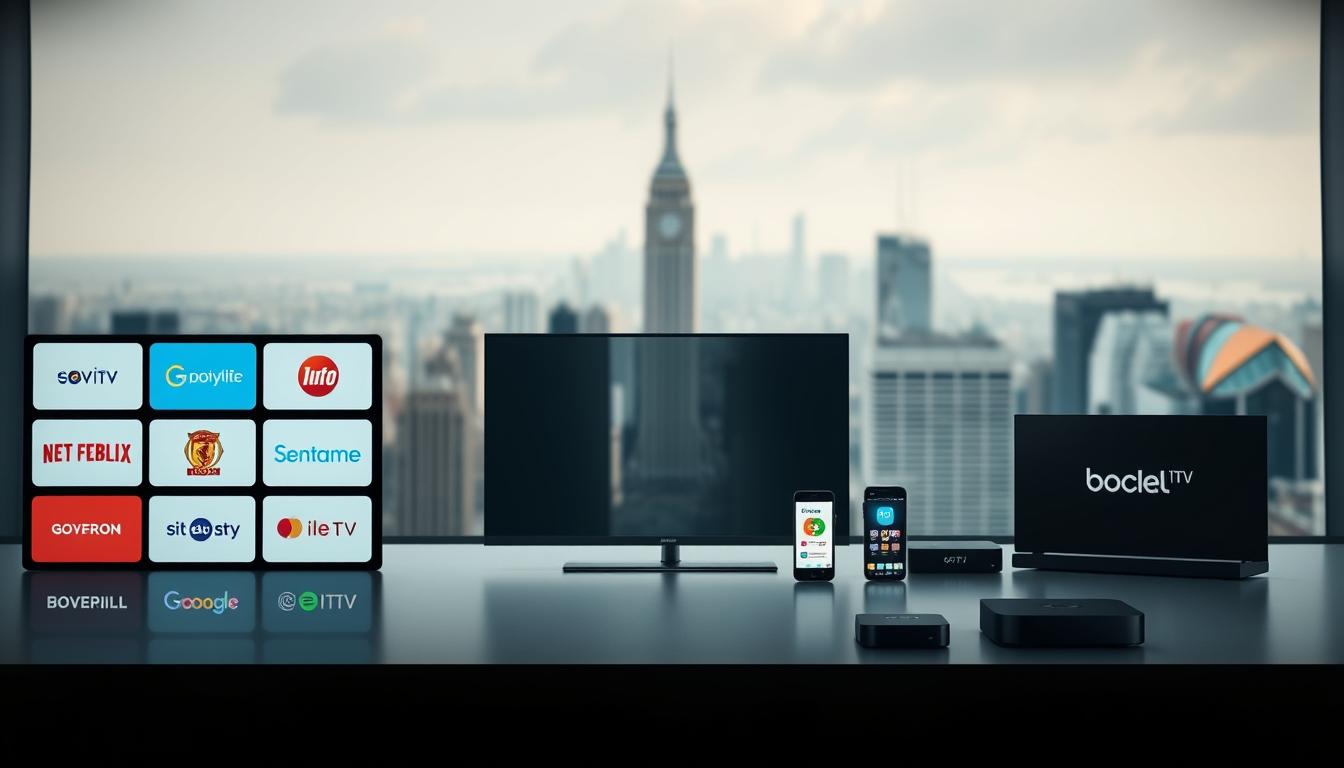
Your choice of streaming platform often dictates how easily content moves between gadgets. Closed ecosystems promise frictionless transitions between screens, while open systems prioritise accessibility over uniformity.

Seamless Apple Device Synchronisation
Apple’s approach removes login hassles – pick up where you left off across devices without touching a remote. Family sharing automatically grants access to purchased content through facial recognition. “It’s like having a personal cinema that knows your seat preferences,” remarks a London-based tech reviewer.
However, this convenience comes with constraints:
- Playlist edits sync instantly but lack third-party tool support
- Screen mirroring works best with newer Apple devices
- Concurrent streams cap at two despite six account slots
Multi-Platform Streaming Freedom
Open-system apps thrive on flexibility, running smoothly on Android phones, Fire Sticks, and smart TVs. Users can:
- Import channel lists from external sources
- Adjust buffering settings for weaker connections
- Access features through web browsers
Hardware matters here – £30 streaming sticks stutter with 4K feeds, while £100+ boxes handle complex menus effortlessly. Most services permit unlimited simultaneous streams, though some throttle speeds during peak hours.
User Interface and Playback Experience
Navigating today’s streaming platforms feels like choosing between a tailored suit and a wardrobe full of options. One approach prioritises intuitive design for instant gratification, while the other offers endless tweaking possibilities for meticulous users. This contrast defines how viewers interact with content from the moment they press ‘power’.
Streamlined Setup and Ease of Navigation
Ecosystem-integrated services eliminate configuration headaches. Devices automatically recognise accounts through facial recognition or biometric authentication, syncing preferences across gadgets. The navigation system uses oversized artwork and predictive rows, reducing decision fatigue for casual viewers.
Alternative apps demand more groundwork:
- Manual entry of playlist URLs and EPG sources
- Custom folder structures for channel organisation
- Buffer adjustments for regional content access
Customisation and Personalisation Options
Where one platform maintains uniformity, another thrives on flexibility. Tech enthusiasts appreciate granular controls over:
- Theme colours matching room ambience
- Multi-view splits for sports and news
- Third-party plugin support
“The ability to create bespoke interfaces revolutionises how families share devices,” notes a UX designer from Manchester. Parental controls extend beyond content filters, allowing time-based access rules per profile.
Playback consistency varies widely across hardware. Premium streaming boxes handle 8K feeds effortlessly, while budget sticks stutter with complex menus. Matching your device’s capabilities to service requirements prevents frustration down the line.
iptv vs apple tv plus: Core Differences in Features
The battle for viewer loyalty increasingly hinges on behind-the-scenes functionalities shaping daily interactions. While both platforms deliver entertainment, their technical philosophies create distinct user journeys from setup to binge-watching.

Update Strategies and Viewer Control
Ecosystem-focused services automatically push updates across linked gadgets, ensuring uniform improvements. A Manchester-based tech blogger observes: “It’s like having an invisible engineer optimising your telly overnight.” Third-party solutions evolve patchily – popular apps gain multi-server support and buffer adjustments, while lesser-known ones stagnate.
| Feature | Popular Apps | Ecosystem Services |
|---|---|---|
| Update Mechanism | Developer-dependent | OS-linked automation |
| Playback Customisation | Multi-view layouts | Basic speed controls |
| Content Discovery | Manual channel sorting | AI-curated rows |
| Offline Access | Downloadable playlists | Streaming-only |
| Device Synchronisation | Variable | Instant profile sync |
Discovery tools highlight contrasting priorities. Algorithmic systems analyse viewing hours to serve personalised picks, while traditional guides let users hunt through channels like Saturday morning telly. Granular controls in third-party apps appeal to tinkerers – think custom quality presets per network or bedtime auto-shutdowns.
Frequent updates in leading apps introduce features like global search across providers or split-screen sports monitoring. Ecosystem services bake enhancements into OS upgrades, prioritising stability over flashy add-ons. This divergence means power users gravitate towards flexibility, while convenience-seekers prefer set-and-forget simplicity.
Live Streaming, EPG and Additional Viewing Controls
Modern viewers demand more than just content libraries – they want control over how and when they watch. Advanced features now transform passive consumption into interactive experiences, particularly for those prioritising real-time access.
Real-Time Broadcasting and Catch-Up Features
Leading apps provide TV-style scheduling through electronic programme guides (EPG). Services like Smarters Player display air times and synopses for 500+ channels, letting users set reminders for upcoming shows. Missed programmes? Catch-up functions rewind broadcasts up to seven days.
This contrasts with platforms focusing solely on pre-recorded content. One tech reviewer notes: “You can’t pause live news on demand-first services – that immediacy gap matters for sports and current affairs fans.”
Picture-in-Picture and Multi-View Configurations
Cutting-edge apps let viewers stream four channels simultaneously – ideal for monitoring football matches while browsing highlights. The latest IPTV+ update introduces resizable windows that float over other apps, perfect for keeping tabs on live events while texting.
Key differences emerge in screen management:
- Sports mode: Quad-view with audio switching
- News tracker: Main feed + ticker tape
- Parental oversight: Child’s screen preview
These tools cater to multitaskers wanting more than static viewing – though they require compatible hardware for smooth operation.
Security,
In an era where digital footprints are scrutinised, content platforms prioritise data protection through military-grade encryption. Leading services now employ 256-bit SSL protocols, safeguarding payment details and viewing histories. Regular penetration testing ensures vulnerabilities get patched before exploitation.
Modern parental controls extend beyond content filters. Advanced systems analyse video thumbnails in real-time, blocking inappropriate material before playback starts. Time-based access rules let families set weekday screen allowances while maintaining weekend flexibility.
Two-factor authentication has become standard for account security. Biometric logins through facial recognition or fingerprints add extra layers of protection. Some apps now integrate VPN compatibility, masking IP addresses during international streaming.
Privacy-conscious viewers should review data retention policies. Reputable providers automatically delete search histories every 30 days and avoid sharing analytics with third parties. Always verify encryption standards in your chosen platform’s security whitepapers.
Ultimately, your ideal service balances robust security features with intuitive access controls. Whether prioritising child safety or anonymous viewing, today’s options cater to diverse digital safety needs.
FAQ
Can I use IPTV apps on Apple devices like iPad or Apple TV?
Yes, many IPTV apps such as Smarters Player support Apple devices. However, Apple TV Plus is exclusively optimised for Apple’s ecosystem, offering seamless integration with features like Family Sharing and AirPlay.
Do IPTV services offer catch-up features for live channels?
Some IPTV providers include catch-up functionality and electronic programme guides (EPG), allowing viewers to watch missed content. Apple TV Plus focuses on on-demand streaming, with no live channel support or EPG features.
Are there hidden costs with Apple TV Plus subscriptions?
Apple TV Plus uses transparent pricing with no hidden fees. In contrast, certain IPTV services may charge extra for premium channels, playlist updates, or advanced features like multi-view configurations.
How does content variety compare between the two platforms?
Apple TV Plus prioritises original series and films, while IPTV apps often provide broader access to international live channels, movies, and shows across multiple genres and languages.
Can I share my IPTV subscription with family members?
Family sharing policies vary by IPTV provider. Apple TV Plus allows up to six users under one subscription, with personalised recommendations and viewing controls for each profile.
Which service supports picture-in-picture playback?
Apple TV Plus offers built-in picture-in-picture on compatible devices. Some third-party IPTV apps may include this feature, but it depends on the developer’s implementation and device compatibility.
Are IPTV apps updated regularly for security improvements?
Reputable IPTV app developers release updates to address security and functionality. Apple TV Plus benefits from Apple’s frequent system-wide security patches and privacy-focused practices.